Vienna to Venice by Train: The Scenic Way to Italy
Taking the train is a great way to travel from Vienna to Venice, offering comfortable onboard facilities and scenic views along the route.
Moreover, unlike taking a flight, the train will get you directly into the heart of Venice.
This guide explains what it is like to travel by train between Vienna and Venice, how to book tickets, and what you can expect from the journey.
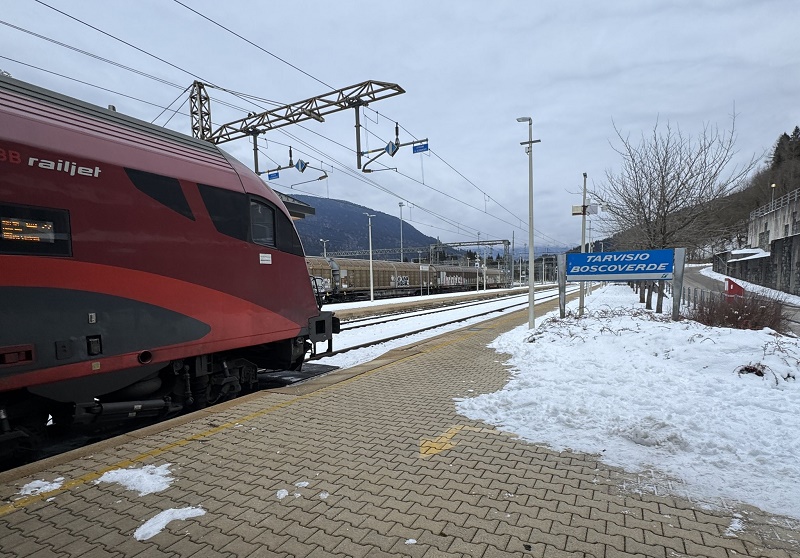
A Vienna-Venice Railjet train at the Austrian-Italian border station of Tarvisio. ©AndyBTravels
By train from Vienna to Venice
If you want to travel by train between Vienna and Venice, you can choose between daytime services and a night train.
ÖBB – the Austrian Federal Railways – operates two modern Railjet services each day between Vienna and Venice, with a journey time of just over seven hours.
You can also travel on a Nightjet sleeper train, also run by ÖBB, which completes the journey in just under eleven hours.
The daytime train is ideal if you want to take in the scenery, while the night train is a good option if you are looking for convenience, as it saves a night’s hotel stay and takes less time away from your valuable sightseeing time.
On DiscoverByRail, you can find more information about Railjet and Nightjet trains, including details on travel classes and onboard facilities.
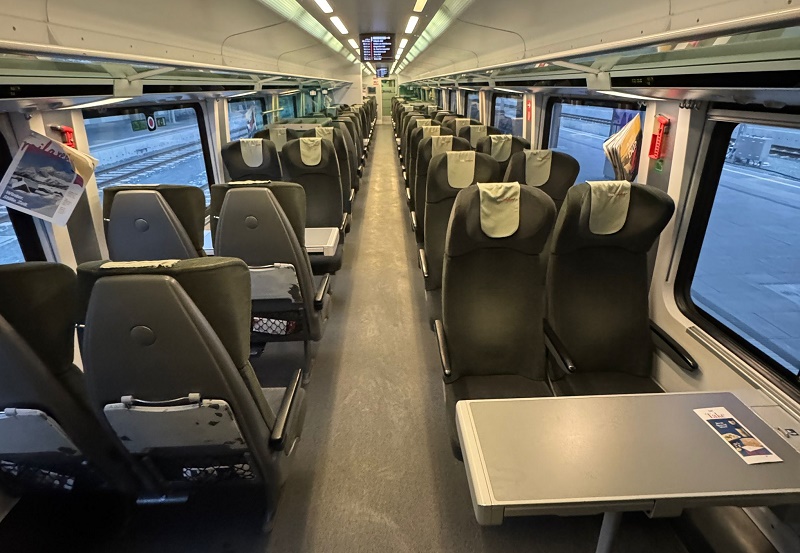
Second class seats on a Railjet train. ©AndyBTravels
Booking your ticket
You can easily search for train connections and compare prices on the reliable booking website Omio, which sells tickets for both the daytime Railjet trains and Nightjet sleeper train and accepts all major foreign debit and credit cards.
Use the search tool below to check train times and prices for your chosen travel date.
A trip from Vienna to Venice by Railjet train
If you take the daytime Railjet train between Vienna and Venice, you can look forward to some beautiful scenery along the way.
You’ll start your train journey to Venice at Wien Hauptbahnhof (Wien Hbf), the main railway station of Vienna.
Soon after departing Wien Hbf, the train traverses the historic Semmering Railway, which links Vienna with Graz.
Built between 1848 and 1854, it is the world’s first mountain railway and a UNESCO World Heritage Site.
The line is famous for its numerous tunnels and arched viaducts, offering excellent views of the surrounding mountain landscape.
After stopping in Graz, the Railjet continues towards Klagenfurt and Villach, before crossing the Austrian-Italian border at Tarvisio.
In Italy, the train calls at cities such as Udine and Treviso, both well worth visiting if you want to make a stopover en route or are looking for a less touristy alternative to Venice.
Note that Vienna-Venice trains call at two different stations in Venice: Venezia Mestre, the modern-day town on the mainland, and Venezia Santa Lucia in the historic centre, located right on the banks of the Grand Canal.
To travel between Venezia Mestre and Venezia Santa Lucia, the train crosses the Venetian Lagoon on a causeway, offering some scenic views along the way.
Which station is best for you depends on the location of your hotel, although Venezia Santa Lucia is the station you need if you want to visit the main sights of Venice.

An ÖBB Railjet train at Wien Hbf, the main railway station of Vienna. ©Paliparan
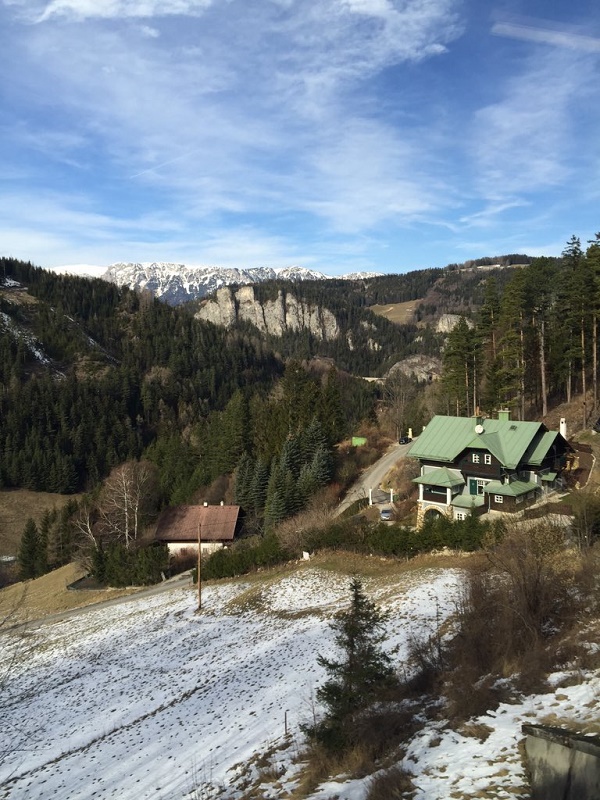
View along the Semmering Railway Line. ©AndyBTravels

Venezia Santa Lucia station. Unlike taking a flight to Venice, arriving by train means you are on the banks of the Grand Canal as soon as you step outside the station! ©Paliparan
Conclusion
The train is a great way to travel between Vienna and Venice, as it takes you in comfort from the city centre of the Austrian capital right to the banks of the Grand Canal.
You can choose between daytime Railjet trains, which are ideal if you want to enjoy some of the beautiful scenery along the way, or the Nightjet sleeper train, a convenient option that saves a night’s hotel stay and allows you to maximise your sightseeing time.