Spain Suspends Evening High-Speed Trains, Caps Speed
Spanish authorities have suspended all evening high-speed trains between Madrid and Barcelona to allow maintenance work to be carried out more effectively.
Evening train service suspension
The Spanish Ministry of Transport has decided to suspend all high-speed services after 20:00 on the high-speed railway line between Madrid and Barcelona for an indefinite period.
The decision was taken following the accident on 18 January, which resulted in the derailment of two high-speed trains in Adamuz, near Córdoba in the Andalusia region, causing 46 deaths and almost 300 injuries.
According to Spanish local media, sources at Adif (Spain’s railway infrastructure manager) indicated that there is currently not enough time to carry out adequate checks on the line, which prompted the Ministry of Transport to extend the nighttime maintenance window so workers can thoroughly inspect and repair the infrastructure.
In recent weeks, train drivers had already complained about the poor condition of the infrastructure on the Madrid–Barcelona high-speed railway line.
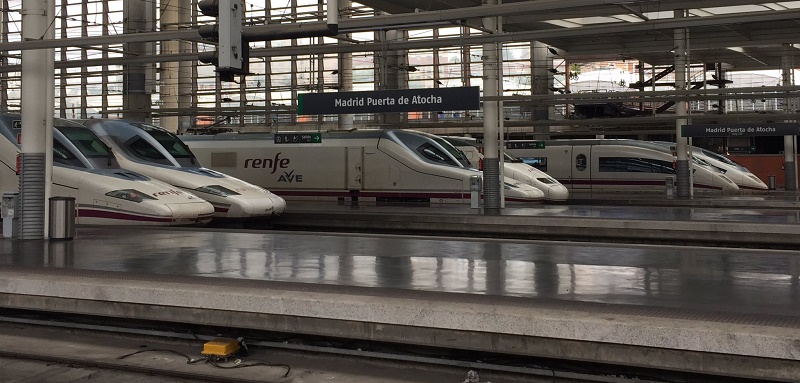
Renfe high-speed trains at the station of Madrid Atocha. ©AndyBTravels
Train cancellations
Adif had already reached an agreement with Spanish national rail operator Renfe and private high-speed operators Iryo and Ouigo España to reduce the maximum speed on the Madrid–Barcelona line for the remainder of the year.
As this adds a minimum of 25 minutes to the journey time, the last trains of the day were already cancelled, as they fell within the maintenance slot.
The current decision to further extend the maintenance slot will lead to even more cancellations on the Madrid to Barcelona route.
In addition to services departing after 20:00, this will also affect some early morning services, such as Ouigo’s 06:25 train from Barcelona and Madrid.
According to Renfe sources, some AVE trains are taking between one and two hours longer to complete the Barcelona–Madrid journey, with some services taking up to six hours.
Renfe has decided to run double-unit trains to maintain seat capacity.
The national Spanish rail operator has also allowed passengers to make changes or cancellations free of charge if their train is cancelled and the proposed alternative does not meet their needs.
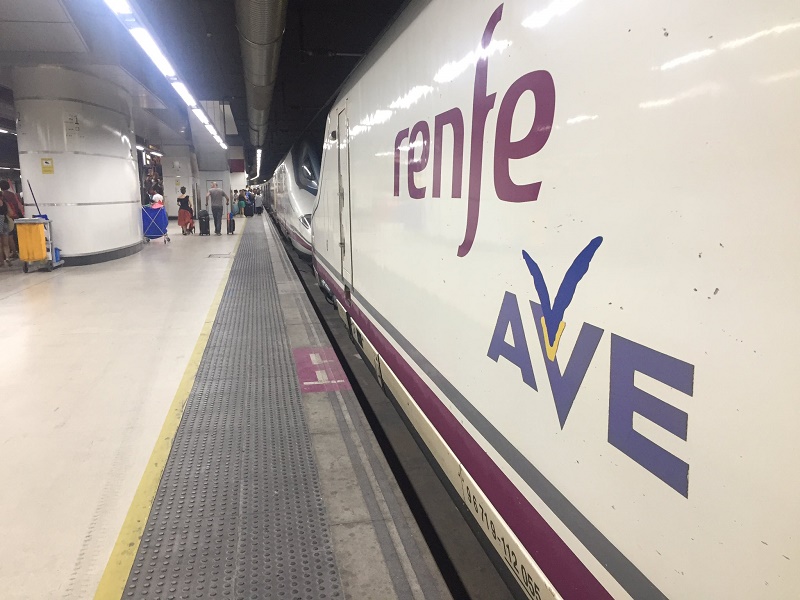
Renfe AVE high-speed train at Barcelona Sants station. ©AndyBTravels
Spain’s unique high-speed rail problem
I do not think that the current measures in Spain to restrict the maximum speed on high-speed lines and suspend some evening trains come as a surprise.
After all, high-speed railway lines generally have a very limited time frame in which inspections and maintenance can be carried out.
In Spain, this situation is further complicated by the fact that the high-speed railway network uses a different track gauge from the conventional network.
By contrast, in Italy the high-speed and conventional railway lines share the same gauge, and there are fairly frequent junctions between them.
This makes it easier to close a small section of high-speed line for maintenance and divert trains, something that would not be possible in Spain
Train travel is one of the safest modes of transport, but there is no room for complacency.
It is especially vital for the infrastructure to be in good condition, built properly to meet all safety standards, and regularly maintained.
Safety warnings from train drivers and other railway employees should never be ignored, and maintenance must be carried out properly with inspections completed thoroughly.
Let’s hope that the Spanish authorities now realise this and take thorough action, and that temporary measures such as suspended evening high-speed trains and reduced maximum speeds can be reversed soon.