A Guide to Trenitalia InterCity (IC) Trains
This guide shows you what it is like to travel on an InterCity (IC) train with Trenitalia, the national railway company of Italy.
Long-distance trains in Italy
Trenitalia, the Italian national railway company, operates several types of long-distance trains.
Its most premium service is the Frecciarossa high-speed train, followed by the second-tier Frecciargento high-speed trains.
Next in the hierarchy are Trenitalia’s InterCity (IC) services, which are conventional long-distance trains.
You will find these InterCity trains on routes all across Italy, and you are likely to use at least one or two of them on any serious Italian rail holiday.
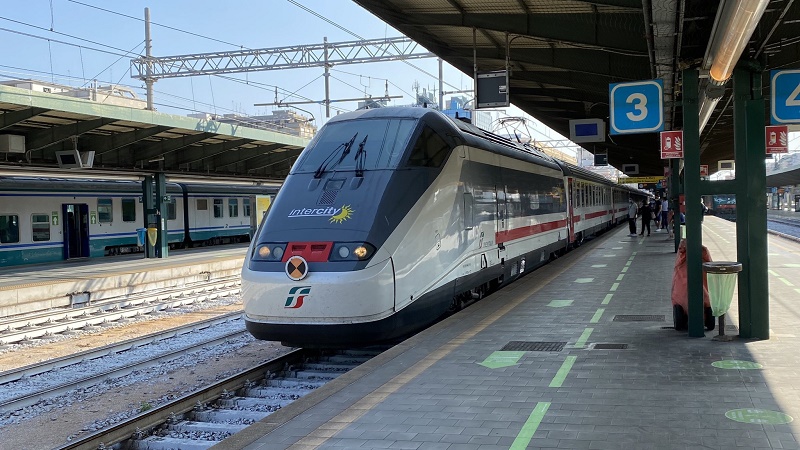
A Trenitalia InterCity train at Bari Centrale. ©AndyBTravels
Travel classes on Trenitalia InterCity trains
There are just two travel classes on Trenitalia InterCity trains:
– First class, with a seating lay-out in a 1+2 configuration
– Second class, with a seating lay-out in a 2+2 configuration
Apart from wider seats, more space, and a generally quieter coach, there are no other differences between first and second class.
Almost all Italian InterCity trains have open-plan seating, although some also have six-seat side compartments.
Italian InterCity trains require compulsory seat reservations, and your ticket will automatically include a reserved seat.
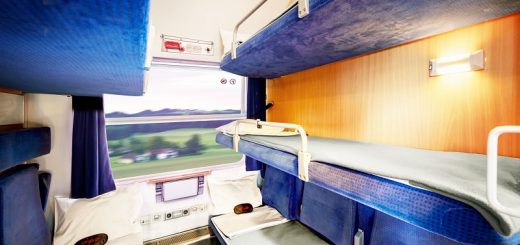
There are also InterCity Notte services in Italy, which are Trenitalia’s night trains.
These trains also offer couchette and sleeper coaches in addition to standard seats.
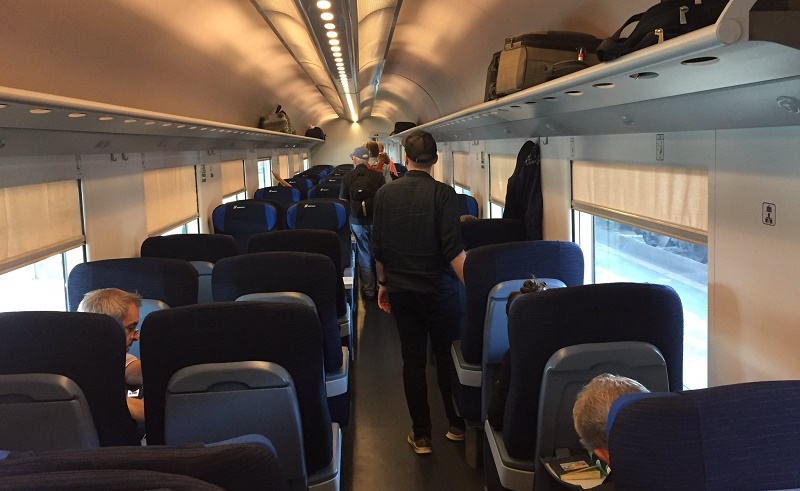
First class seats on an InterCity train. ©AndyBTravels
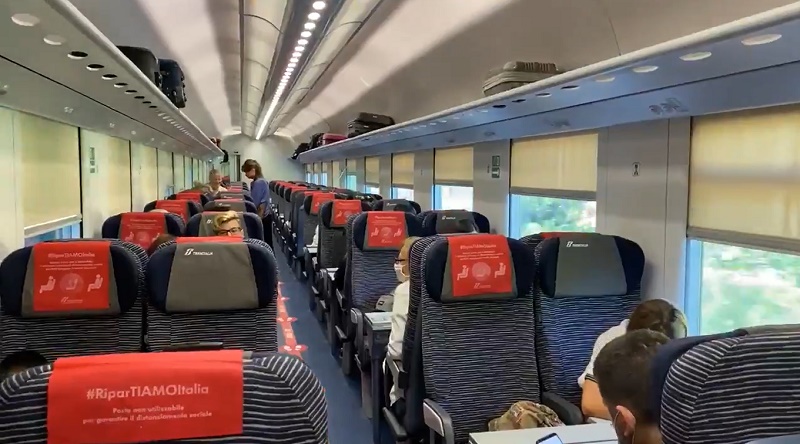
Second class seats on an InterCity train. ©AndyBTravels
Other facilities
Trenitalia InterCity trains have power sockets in both classes, although there is no Wi-Fi internet.
InterCity trains in Italy do not have a café-bar coach, although you will find vending machines selling snacks and drinks.
Of course, you are free to bring your own food and drinks on board.
Buy your Italian train ticket
You can book Trenitalia InterCity trains, as well as all other Italian train tickets, through the reliable booking platform Omio.
A great advantage of Omio is that you can compare Trenitalia services with those of the private operator Italo in a single search.
Use the journey planner below to find the best connection on your travel date, compare ticket prices, and actually book your train.
If you are travelling around Italy using an Interrail or Eurail Pass, you must make a special passholder reservation to travel on an InterCity train.
InterCity travel tips
Although InterCity trains are not as stylish as Frecciarossa trains, they are often cheaper.
On routes where there is no dedicated high-speed line, InterCity trains are not much slower than high-speed services, so they can be worth taking.
However, keep in mind that on longer InterCity routes, these trains can pick up delays.
For example, if you plan to take an afternoon InterCity train from Bologna to Milan that actually started earlier that morning in Salerno, it may not be as punctual as boarding an InterCity train at its starting point for just a couple of stops.
It is therefore wise not to plan too tight a connection at the end of such a long route.
AndyB’s top travel tip: the best Italian InterCity route is the train from Rome to Sicily, which is carried on a special train ferry across the Strait of Messina.
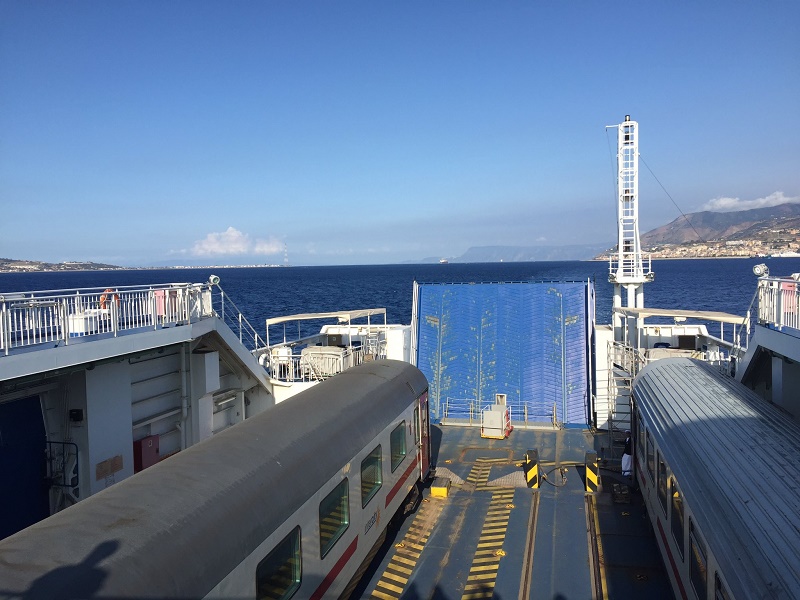
InterCity carriages on the train ferry between Villa San Giovanni on the Italian mainland and Messina on Sicily. ©AndyBTravels
Conclusion
InterCity trains are the conventional long-distance services of Italy’s national railway company, Trenitalia.
Although these trains are not as fast or luxurious as Trenitalia’s Frecciarossa high-speed services, they still provide a comfortable way to travel, with ticket prices often being more affordable.